




Signs You Need Brake Service (And What to Do)
A Complete Guide to Warning Signs, Maintenance, and Safety from Southern Chevrolet in Alexandria, LA
Brakes rarely quit without warning. They usually drop hints first, like a squeal at a stoplight or a shudder in traffic. If you’ve wondered how to tell if your brakes are bad, Southern Chevrolet in Alexandria, LA, has put together this guide to the warning signs, why service matters, and what to do next.
Key Takeaways
- A high-pitched squeal often comes from the pad wear indicator, signaling thin brake pads.
- Grinding usually means the pads are worn through and can damage the rotors.
- Pulling, a vibrating or spongy pedal, a warning light, or a burning smell all call for an inspection.
- Pad life varies with driving habits and load, so regular inspections beat a single mileage number.
- Early service is safer and can keep a pad replacement from becoming a rotor or caliper repair.
How Can You Tell If Your Brakes Need Service?
New noises, changes in pedal feel, vibration, and pulling are the most common signs that brakes need to be replaced or inspected.
Squeaking or Squealing
Asking “Why are my brakes squeaking/squealing?” The usual answer is the wear indicator, a small metal tab on many pads that squeals as the pad gets thin. A quick squeak on a damp Louisiana morning may just be light surface rust that fades after a few stops. A squeal that sticks around deserves an inspection.
Grinding or Metal-on-Metal Noise
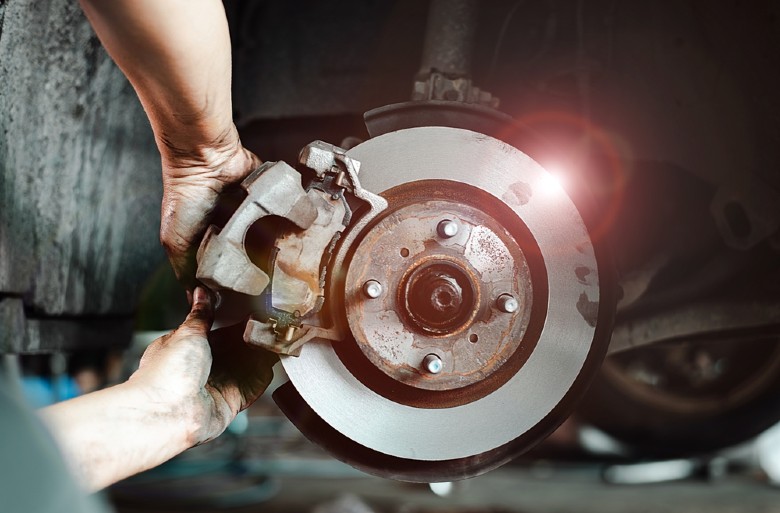
Grinding is more urgent. It often means metal is contacting the rotor, which can turn a pad job into a rotor replacement.

Pulling to One Side When Braking
Wondering “Why is my car pulling to one side?” If it happens mainly when braking, a sticking caliper, restricted brake hose, or uneven pad wear could be the cause. If it pulls all the time, check tire pressure and alignment too.
A Vibrating or Pulsing Brake Pedal
If you’re asking “Why is my brake pedal vibrating during normal stops?” an uneven rotor surface, often called warped rotors, is a likely culprit. Some pulsing during an emergency-style stop, though, can simply be the antilock brakes working.
A Soft or Spongy Pedal
A pedal that sinks lower or feels mushy can point to air or moisture in the brake fluid, a leak, or a master cylinder problem. Since this affects stopping power directly, schedule service right away.
A Brake Warning Light
A brake or ABS light can signal low fluid or a system fault. The red brake light also comes on when the parking brake is engaged, so if it stays lit after releasing it, have the system checked.
A Burning Smell
A sharp, hot smell after heavy braking can mean overheated brakes or a dragging caliper. Let them cool, then get them inspected.
When Do Brakes Need to Be Replaced?
When do brakes need to be replaced? It depends on how you drive, what you drive, and what you haul, so regular inspections are the best guide.
Brake pads are commonly estimated to last roughly 25,000 to 70,000 miles, with stop-and-go driving, towing, and heavier trucks and SUVs landing toward the shorter end. Brake fluid absorbs moisture over time, which matters in humid Central Louisiana, so follow the interval in your Chevrolet owner’s manual. If you’re thinking, “When do I need new brakes?” have them checked during routine visits like tire rotations.
Here’s what affects each main brake component:
| Component | What Shortens Its Life | Signs It Needs Attention |
|---|---|---|
| Brake pads | Stop-and-go traffic, towing, hard stops | Squealing, grinding, longer stops |
| Rotors | Excess heat, pads worn to metal | Vibration, pulsing pedal |
| Brake fluid | Moisture absorption over time | Soft or spongy pedal |
| Calipers | Corrosion, sticking slide pins | Pulling, burning smell |
Why Is Regular Brake Service Important?
Healthy brakes protect everyone in and around your vehicle, and early fixes stay simpler. Worn parts can lengthen stopping distances, which matters most during a sudden slowdown on I-49 or on wet roads after an afternoon storm. An inspection lets a technician measure pad thickness and check rotors, calipers, and fluid before small issues spread.
What Should You Do If You Notice These Signs?
Schedule a brake inspection as soon as a warning sign shows up. Until then:
- Note when the symptom happens.
- Leave extra following distance and avoid hard braking.
- If the pedal sinks toward the floor or the vehicle won’t stop normally, don’t drive it. Arrange a tow.
Schedule Brake Service at Southern Chevrolet
Most brake problems give plenty of warning, and acting early keeps you safer and helps avoid bigger repairs. Whether you’re hearing a squeal or can’t remember your last inspection, Southern Chevrolet in Alexandria, LA, can help you figure out what your brakes need.
Contact the Southern Chevrolet service department to schedule an appointment. A technician can inspect your pads, rotors, calipers, and fluid, then walk you through what they find.
FAQ
Is it safe to drive with squeaking brakes?
A light squeal doesn’t mean failure is imminent, but it usually means thin pads. Schedule an inspection before it turns into grinding.
Why do my brakes squeak after it rains?
Moisture can leave light surface rust on the rotors, causing a brief squeak for the first few stops. If it doesn’t go away, have it checked.
Do electric Chevrolet models need brake service?
Yes. Regenerative braking can reduce pad wear, but pads, rotors, calipers, and fluid still need regular inspection.
How often should brakes be inspected?
Many drivers have their brakes checked during routine maintenance, such as tire rotations. Your Chevrolet owner’s manual lists the recommended inspection and brake fluid intervals.
Do rotors always need to be replaced with new pads?
Not always. A technician will measure the rotor thickness and check for scoring or uneven wear to determine whether they can remain in service or need replacement.
Southern Chevrolet Service Center
Address: 5845 Coliseum Blvd, Alexandria, LA 71303
Phone: (318) 703-4449
Service Hours:
- Monday – Friday: 7:30 AM – 5:30 PM
- Saturday: 8:00 AM – 2:00 PM
- Sunday: Closed